

Alucobond in Signage Manufacturing: A Business Guide to Material Selection
In the competitive landscape of modern business, your signage isn’t just a directional tool; it’s a powerful statement of your brand’s identity, quality, and professionalism. Choosing the right material for your business signage is a critical decision that impacts not only its aesthetic appeal but also its durability, maintenance, and long-term cost-effectiveness.
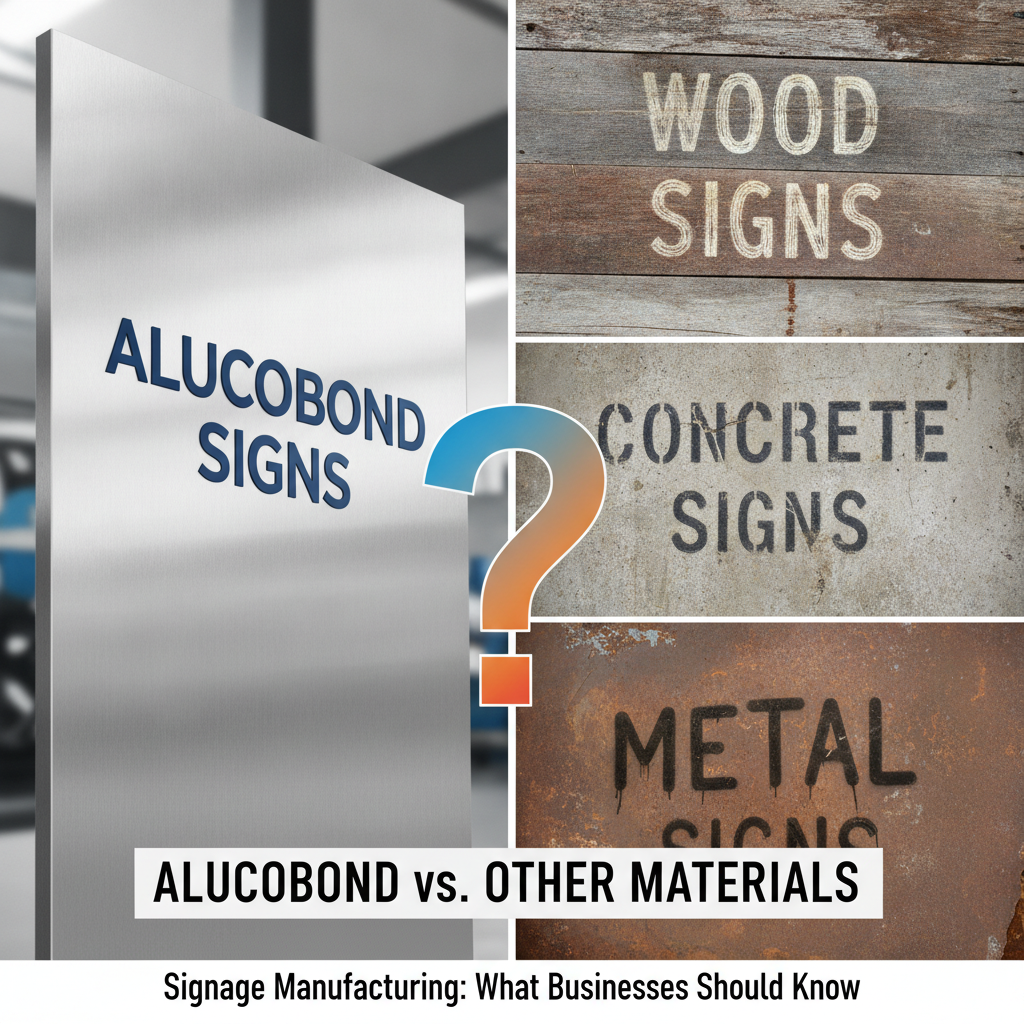
Among the myriad of options available, **Alucobond** (a leading brand of Aluminum Composite Panel or ACP) has emerged as a premium choice for many businesses. But how does it stack up against other popular materials? Let’s delve into what businesses should know when making this vital decision.
What Exactly is Alucobond?
Alucobond is a sophisticated **Aluminum Composite Panel (ACP)** consisting of two pre-painted aluminum sheets bonded to a polyethylene core. This unique construction results in a material that is incredibly lightweight yet exceptionally rigid and flat. It’s renowned for its superior flatness, formability, and durability, making it a favorite for architectural cladding and, increasingly, for high-quality business signage.
Common Signage Materials: The Alternatives
Before we compare, let’s briefly look at the other main contenders in the signage material arena:
* **Solid Aluminum:** Durable, rust-resistant, and offers a sleek metallic finish. Can be heavy and more expensive than ACP for large formats.
* **Acrylic (Plexiglas/Perspex):** Versatile, lightweight, and available in various colors and transparencies. Excellent for illuminated signs, but can be prone to scratching and cracking.
* **PVC (Sintra/Komatex):** A lightweight, cost-effective plastic foam board. Easy to cut and print on, ideal for indoor or short-term outdoor use, but less durable for long-term exterior applications.
* **High-Pressure Laminate (HPL):** Extremely durable and impact-resistant, often used for outdoor signs requiring exceptional strength and resistance to vandalism. Heavier and less flexible in design than ACP.
* **Wood:** Offers a natural, rustic, or classic aesthetic. Highly customizable but requires more maintenance and is susceptible to weather and pests.
* **HDPE (High-Density Polyethylene):** A robust, moisture-resistant plastic, often used for routed signs or playground equipment. Offers durability but has a more limited aesthetic range.
Alucobond vs. Other Materials: A Business Comparison
When evaluating materials for your next business sign, consider these crucial factors:
1. Durability & Weather Resistance
* **Alucobond:** Offers excellent weather resistance. It’s UV stable, rigid, and resists warping, fading, and corrosion, making it ideal for long-term outdoor exposure in diverse climates.
* **Solid Aluminum:** Very durable and rust-proof, but can be prone to denting if it’s a thinner gauge.
* **Acrylic:** Good for outdoor use but can become brittle over time in extreme temperatures and is susceptible to scratching.
* **PVC:** Less durable for long-term outdoor exposure; can warp, fade, or become brittle with prolonged sun and weather.
* **HPL:** Exceptionally durable and resistant to impact, scratches, and harsh weather conditions.
**Business Insight:** For signs that need to withstand the elements for years without significant degradation, **Alucobond** and **HPL** are top contenders.
2. Aesthetics & Design Versatility
* **Alucobond:** Provides a sleek, modern, and high-end aesthetic with a perfectly flat surface. Available in a vast array of colors, finishes (metallic, brushed, natural wood/stone look), and can be routed, folded, and formed into complex shapes. This offers immense creative freedom for brand expression.
* **Solid Aluminum:** Offers a classic metallic appearance, can be painted or polished.
* **Acrylic:** Excellent for vibrant colors, translucent or transparent effects, and is perfect for back-lit or internally illuminated signs.
* **PVC:** Has a matte finish and is great for direct printing, but generally offers a less premium look.
* **HPL:** Known for its hard, flat surface, often mimics wood grains or solid colors, providing a robust but less adaptable aesthetic.
**Business Insight:** If a sophisticated, modern, and highly customizable look is paramount for your brand, **Alucobond** offers unparalleled design flexibility.
3. Weight & Installation
* **Alucobond:** Remarkably lightweight for its rigidity. This significantly simplifies transportation, handling, and installation, especially for large-format signs, potentially reducing labor costs.
* **Solid Aluminum:** Can be heavier, especially for thicker gauges or large signs, requiring more robust support structures.
* **Acrylic/PVC:** Very lightweight and easy to handle.
* **HPL:** Can be quite heavy, necessitating strong mounting systems and potentially higher installation costs.
**Business Insight:** For large or complex installations, **Alucobond’s** lightweight nature can translate to significant savings in labor and structural requirements.
4. Maintenance & Longevity
* **Alucobond:** Requires minimal maintenance. Its smooth, non-porous surface is easy to clean and resists dirt accumulation. With proper care, Alucobond signs can maintain their pristine appearance for 10-20 years or more.
* **Solid Aluminum:** Low maintenance, but scratches can be noticeable on brushed finishes.
* **Acrylic:** Can scratch easily and may require gentle cleaning. Some acrylics can yellow over time with sun exposure.
* **PVC:** May require more frequent cleaning outdoors and has a shorter lifespan, potentially needing replacement sooner.
* **HPL:** Extremely low maintenance and boasts an impressive lifespan.
**Business Insight:** The long-term durability and low maintenance of **Alucobond** contribute to a lower total cost of ownership over its extended lifespan.
5. Cost (Initial vs. Long-term ROI)
* **Alucobond:** Generally falls into the mid-to-high range for initial material cost. However, its longevity, low maintenance, and reduced installation costs often result in an excellent long-term return on investment (ROI).
* **Solid Aluminum:** Can be comparable to Alucobond, especially for thicker gauges.
* **Acrylic:** Mid-range initial cost, with potential for higher costs if illumination is added.
* **PVC:** The most budget-friendly option initially, but its shorter lifespan for outdoor use may lead to higher replacement costs over time.
* **HPL:** Often the highest initial cost due to its robust nature.
**Business Insight:** While **Alucobond** might not be the cheapest upfront, its durability and aesthetic appeal make it a **cost-effective premium choice** for businesses looking for a lasting impression.
When to Choose Alucobond for Your Signage?
Consider Alucobond when your business needs:
* **High-End Architectural Signage:** For businesses where brand image is paramount (e.g., corporate offices, high-end retail, hospitality).
* **Large-Format, Flat Signs:** Where a perfectly smooth, rigid surface is crucial for a professional look.
* **Long-Term Outdoor Applications:** Exposed to various weather conditions and requiring maximum durability.
* **Unique Customization:** Leveraging its ability to be routed, folded, and custom-finished.
* **Reduced Long-Term Costs:** Due to its exceptional longevity and minimal maintenance requirements.
When to Consider Alternatives?
* **Strict Budget Constraints:** PVC or thinner aluminum might be more appropriate for temporary or very budget-conscious projects.
* **Illuminated Signage Focus:** Acrylic is often preferred for light-box signs or individual illuminated letters.
* **Specific Aesthetic Demands:** Wood for a natural look, or HPL for extreme anti-vandalism requirements.
* **Temporary or Short-Term Promotions:** PVC is an economical choice for signs with a limited lifespan.
Making the Right Choice for Your Business
There’s no one-size-fits-all answer in signage manufacturing. The best material for your business sign depends on a careful consideration of your:
* **Budget (initial and long-term)**
* **Location (indoor vs. outdoor, weather exposure)**
* **Desired Aesthetic and Brand Image**
* **Required Lifespan of the Sign**
* **Maintenance Capacity**
* **Specific Functional Requirements**
For businesses aiming for a sophisticated, durable, and long-lasting impression, **Alucobond** stands out as a superior material choice, offering a compelling blend of aesthetics, performance, and value.
To make an informed decision tailored to your specific business needs, it’s always best to **consult with a reputable signage manufacturer.** They can guide you through the options, provide material samples, and help you design a sign that truly reflects your brand’s excellence.
